Ultrafiltration
Suspended solids, turbidity and microbial barrier applications. Often used as pretreatment to NF/RO.
Typical focus: particle removalMembrane treatment technologies
We connect industrial water projects with qualified manufacturers in Türkiye and international technology partners, from process selection and supplier qualification to integrated package delivery.
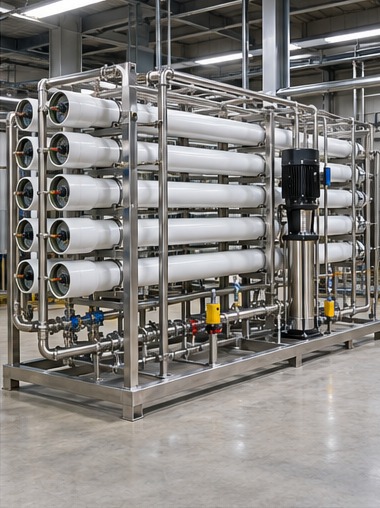
Application-led selection
A membrane package needs to meet the required treated-water quality at an agreed capacity, while managing feed variability, recovery, fouling and concentrate disposal.
Second Desk's Türkiye-based model connects project requirements with suitable Turkish manufacturers, international technology suppliers and specialist engineering partners. We establish a comparable technical brief, assess supplier fit and coordinate the technical-commercial discussions.
Technology map
The right option depends on the contaminants to be removed, feed salinity and downstream use.
Suspended solids, turbidity and microbial barrier applications. Often used as pretreatment to NF/RO.
Typical focus: particle removalSelective reduction of dissolved constituents, especially multivalent ions; selection depends on the separation objective.
Typical focus: selective separationReduction of dissolved salts for process and utility water, selected against feed composition and product specification.
Typical focus: desaltingDesalination of high-salinity feed, with attention to pressure, corrosion resistance, energy and pretreatment.
Typical focus: seawater desalinationEngineering and specification
A defensible supplier comparison begins with common feed, product and site requirements. Short project stories illustrate why each input matters in practice.
| Design input | Why it matters | Evidence to request | Project story & lesson |
|---|---|---|---|
| Feed-water composition | Salinity, temperature, suspended matter, hardness, silica and fouling indicators influence process selection. | Representative water analysis and seasonal variation. | Industrial utility water · Ningbo, ChinaAt Hangfeng Water Treatment Plant, winter feed temperatures fell to about 5°C. UF–RO integration illustrates why seasonal conditions belong in the design basis.Supplier-published case · DuPont |
| Product-water target | Capacity and quality targets define the membrane family, staging and downstream polishing duty. | Agreed output specification and test conditions. | Power generation · High-purity waterA published 5 m³/h power-generation package combined two-pass RO with EDI. The end-use quality target determines the polishing stage, not simply the required flow.Second Desk · Published anonymised scope |
| Recovery and reject handling | Recovery influences concentrate chemistry, scaling risk and water balance. | Design water balance and defined concentrate destination. | Groundwater replenishment · California, USAOrange County's advanced reuse facility treats municipal effluent and routes RO concentrate towards an ocean outfall. The reject destination must be part of the project design.Operator's annual report · OCWD |
| Site and integration | Utilities, available footprint, ambient condition and maintenance access shape the package. | Layout, P&ID, electrical and mechanical battery limits. | Containerised desalination · North AfricaA published SWRO scope used a 40 ft container for factory integration and site commissioning. The transport envelope, service access and tie-ins become part of the equipment specification.Second Desk · Published anonymised scope |
| Operation and maintenance | Cleaning, flushing, spare parts, membrane replacement and monitoring affect lifecycle cost. | Controls philosophy and maintenance documentation. | Steel manufacturing · Vanderbijlpark, South AfricaAt ArcelorMittal's zero-liquid-discharge facility, RO performance was linked to cleaning and downtime. A supplier-reported membrane upgrade highlights the value of maintainability and operating stability.Supplier-published case · DuPont |
| Downstream application | Stable water quality must meet the needs of the actual process, crop or utility system. | End-user water-quality criteria and interface requirements. | Controlled agriculture · Greenhouse ROA published 50 m³/h RO package included sand and carbon filtration and provisions for dosing, flushing and CIP. Irrigation water and fertigation requirements guide treatment selection.Second Desk · Published anonymised scope |
| Resource recovery and reuse | The intended reuse, stream composition and available footprint influence the separation train and commercial value. | Process-stream analysis, reuse objective and water balance. | Dairy production · DenmarkAn Arla Foods mozzarella facility used RO and NF to recover water from a whey-processing stream for cleaning. The reuse application defined the treatment objective.Supplier-published case · DuPont |
Project stories are drawn from published sources. External cases are industry learning examples, not Second Desk projects, clients or partnerships. Second Desk's anonymised scopes are self-published; the engineering lessons are interpretations, not undocumented project outcomes.
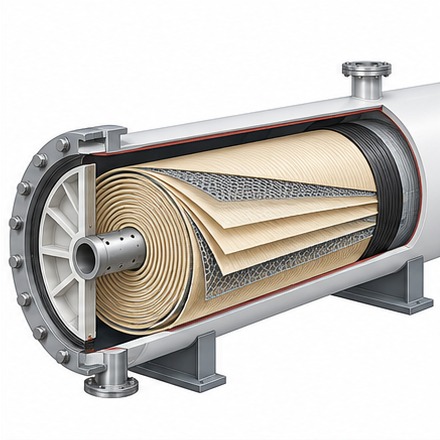
Technical detail
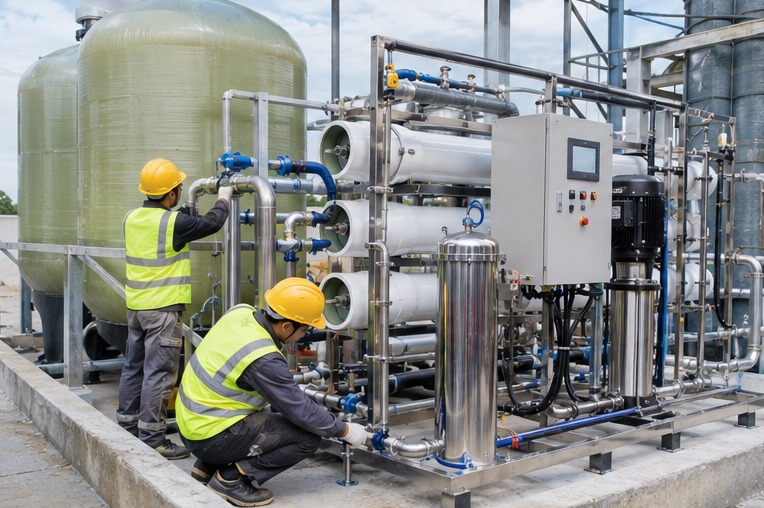
The membrane element, feed spacer, permeate pathway, pressure vessel and manifold must be selected as a complete system. Actual element selection and pressure ratings require manufacturer engineering review.
Conceptual arrangement only. UF backwash and waste arrangements differ by module and process selection.
From design to integrated package
Factory integration reduces uncertainty when mechanical, electrical and automation components are coordinated around documented interfaces.
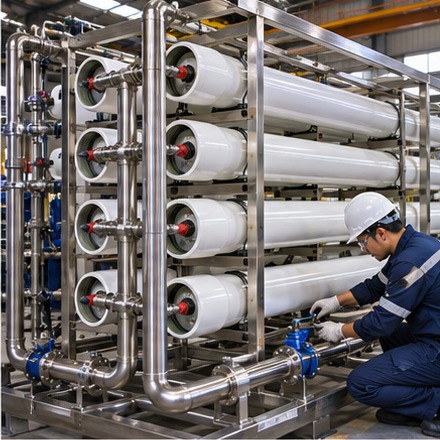
Quality, acceptance and delivery
Define acceptance conditions, inspection points, witness requirements and handover responsibilities before procurement.
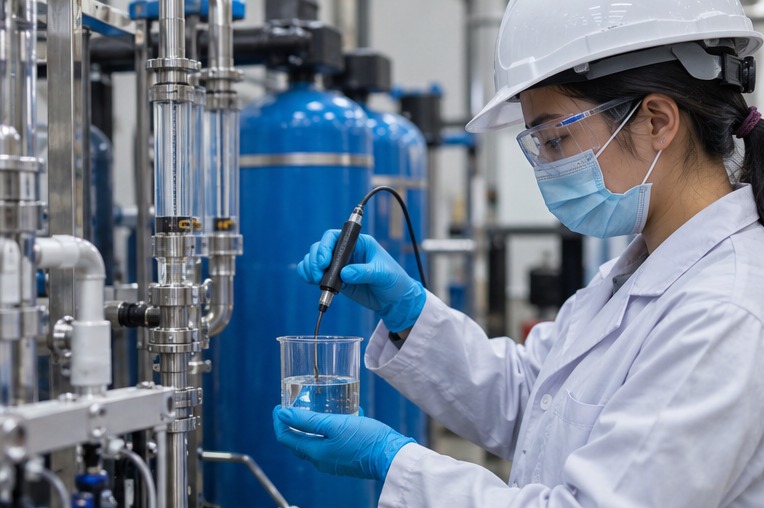
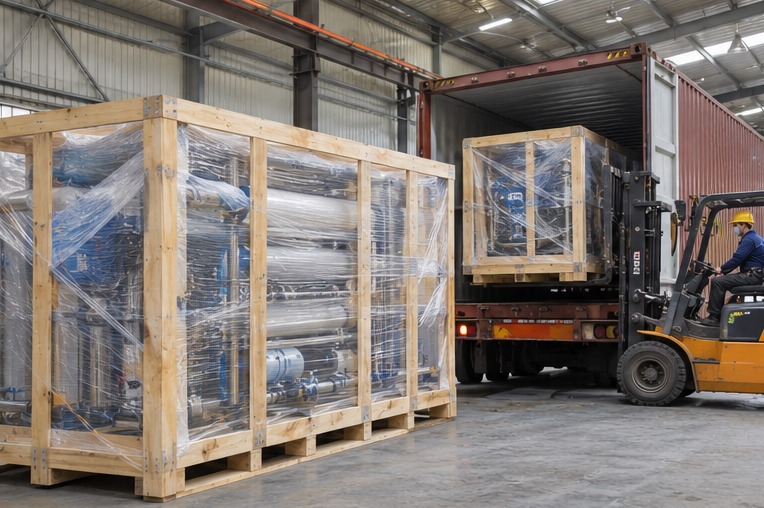
The manufacturer and responsible site parties define all actual inspection, safety, shipping and acceptance requirements for the specific project.
Published anonymised scope
The water-technology page describes a factory-integrated desalination package involving pretreatment, membrane separation, factory acceptance and site commissioning.
Source: SECOND DESK water-sector page. Customer and project identity are withheld; the published scope has not been independently verified.

Türkiye and international partner development
Second Desk brings a Türkiye-based perspective to international technical sourcing and business development. Depending on the application, we identify and coordinate suitable manufacturers and specialist partners in Türkiye and other markets.
Project-specific evaluation of manufacturing capacity, package integration, relevant testing, export readiness and technical documentation.
Requirement clarification, partner selection, commercial qualification and coordinated communication between customers, manufacturers and engineering teams.
Access to relevant OEM, component, integration and local-execution routes, assessed against technical fit, service needs and the destination market.
We compare potential partners against the actual requirement and verify capabilities, references and relevant compliance before any commitment. Engineering, manufacturing, guarantees and contractual delivery remain with the selected qualified parties.
Frequently asked questions
UF typically addresses particulate and suspended matter. NF provides selective separation of dissolved constituents, while RO generally targets broader dissolved salt reduction. Feed composition and the required treated-water duty determine the appropriate process.
Representative water analysis, required product capacity and quality, proposed recovery, concentrate handling, site and utility constraints, operating conditions and the specification for acceptance testing.
Yes, subject to the required process, equipment layout, transport envelope, access, site tie-ins and manufacturer confirmation. Factory and site responsibilities should be agreed in advance.
Yes. Our business development model includes qualified Turkish and international producer, OEM, system-integrator and specialist partner routes. Candidate suitability and any commercial relationship are confirmed for each project.
SECOND DESK is an independent international business development and technical-commercial coordination practice based in Türkiye. Engineering, manufacturing, testing and guarantees are confirmed with the selected qualified supplier or contractor for each opportunity.
Discuss your requirement
Share the application and the information you already have. We can clarify missing items before an engineering or commercial comparison.
This enquiry tool prepares a structured message you can copy into the existing Second Desk contact form. It does not send or store information.
Open the existing contact formRelated technical scopes
Technical references
Illustrative visuals are not reference-project photographs or engineering drawings. Supplier names, certifications, guarantees and compliance remain subject to project-specific verification.